 class="wp-singular news-template-default single single-news postid-8758 wp-custom-logo wp-theme-microwarehouse tribe-no-js">
Copilot Cowork: What the GA Announcement Means for Partners and Customers
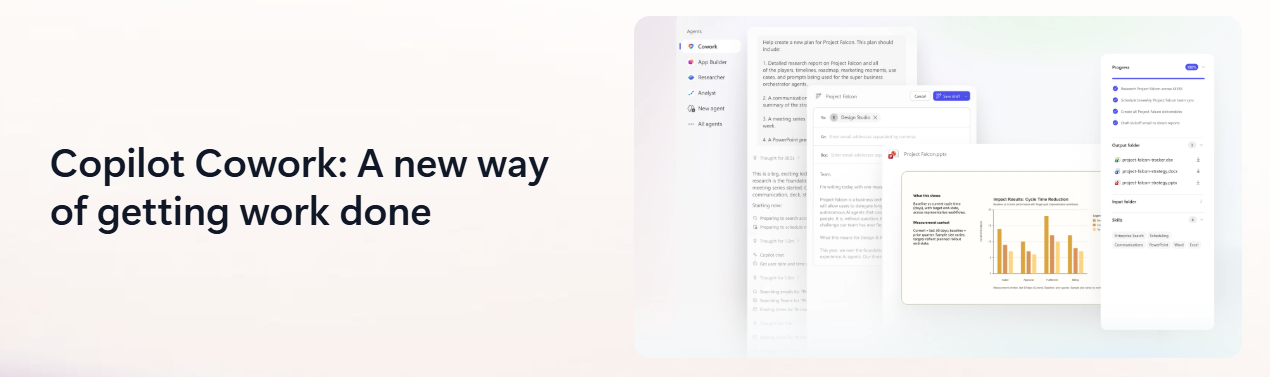
What a week it has been. Microsoft has announced that Copilot Cowork is now generally available, following its public preview in the Frontier programme. Many of the people who used it during preview saw first-hand how powerful an agentic Copilot experience can be, particularly when it is asked to complete complex work rather than simply respond to prompts.
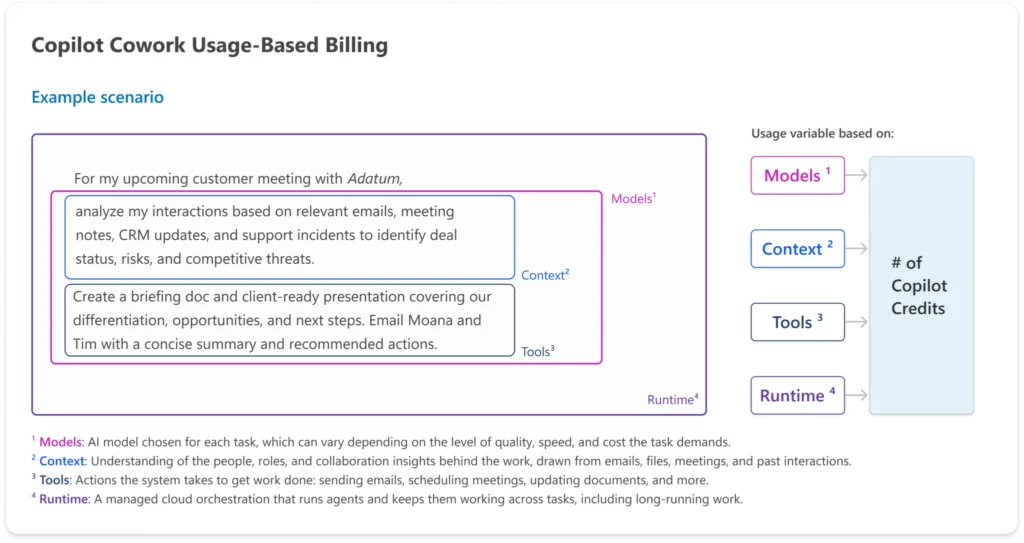
With general availability comes an important commercial change: from 1 July, Copilot Cowork usage will begin to consume Copilot Credits. For customers and partners already experimenting with agents in Copilot Studio, this should not come as a surprise. Cowork is not just a large language model experience; it is an agentic experience that can plan, reason, use tools, and execute work on behalf of the user. That makes it more powerful, but also more compute-intensive to deliver.
Understanding the Announcement
There are three points worth separating: the evolution of Copilot’s capabilities, the change in the Cowork user experience, and the commercial impact of moving to general availability.
Copilot is becoming more multimodal. Customers can already access powerful model capabilities within Microsoft 365 Copilot experiences, including in apps such as Excel, Word, and PowerPoint. That value exists before they even start using Cowork, so not every interaction needs to move into Cowork mode.
Cowork is now easier to access. In the Frontier experience, Cowork is no longer presented simply as a separate app. It now appears as a toggle, allowing users to stay in the standard Microsoft 365 Copilot experience or switch into Cowork when they need an agentic mode that can complete more advanced, multi-step tasks.
Usage is opt-in and will consume credits. From 1 July, actions taken in Cowork mode will begin to consume Copilot Credits. It is also important to note that both Anthropic models and Cowork usage are opt-in experiences, so organisations must choose to enable them before users can access them.
The New Token Economy
This announcement introduces a new way of thinking about AI consumption. The term “tokenomics” has been appearing across social feeds this week, and it is a useful phrase. During the preview period, Microsoft absorbed the cost of running Cowork while customers explored the value of the experience. Now that Cowork is generally available, organisations need to understand the commercial model behind these agentic capabilities.
That shift is important because Cowork can require substantial compute to execute tasks on a user’s behalf. The time savings can be enormous, but businesses now need to evaluate each AI use case through a practical lens: is it more cost-effective to delegate the task to AI, or to have a person complete it manually?
A Practical Example: AI Workshop Follow-Up
One example from my own work makes the value conversation very real. I have been running AI workshops with partners, and one of the follow-up actions is to draft an individual AI adoption and transformation plan for each partner.
That task typically requires me to:
- Review a four-hour workshop transcript.
- Review the collaborative file used during the workshop.
- Analyse the partner’s AI use cases and business systems.
- Identify practical technical guidance for their AI transformation.
- Create an executive roadmap and adoption plan.
Over the last three months, I have been using Cowork to help execute this task. Each time, it has generated a document of around 15 to 20 pages. If I were to create that level of content manually, between meetings and other commitments, I estimate it could take close to three days spread over several days or even weeks.
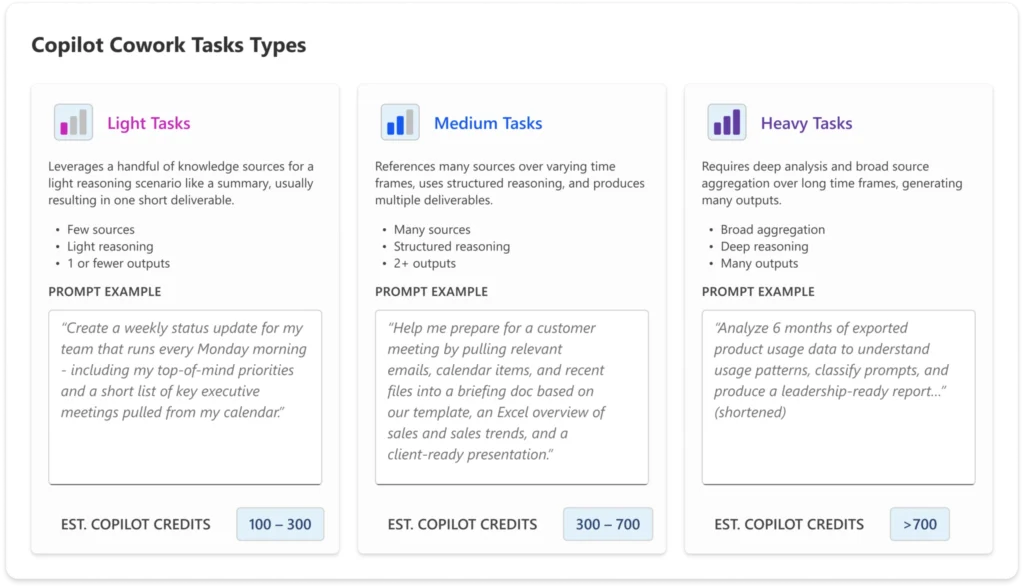
Using the guidance Microsoft has released, I would estimate this type of request sits at the top end of a light task or the lower end of a medium task. Conservatively, that could mean around 350 to 500 credits. At a simple estimate of $0.01 per credit, the task would cost approximately $3.50 to $5.00 and is typically completed in around 20 minutes.
When you compare that against the time and salary cost of doing the same work manually, the business case becomes clear very quickly. This is the lens customers need to apply to their AI use cases, and it is the conversation MSP partners need to be ready to have with their customers.
What Partners Need to Do Next
This new way of looking at AI consumption means partners need to become comfortable with the calculator tools and guidance Microsoft has released. Cowork is not the only experience that can consume credits. Customers building agents in Copilot Studio may already have encountered the need to add credits, so there are now multiple AI-powered experiences that partners need to help customers estimate, govern, and manage.
Partners should prioritise three actions:
- Understand how Copilot Credits are consumed across Cowork and Copilot Studio.
- Use the available calculators to estimate customer usage and cost scenarios.
- Equip both technical and sales teams to explain the commercial impact in customer conversations.
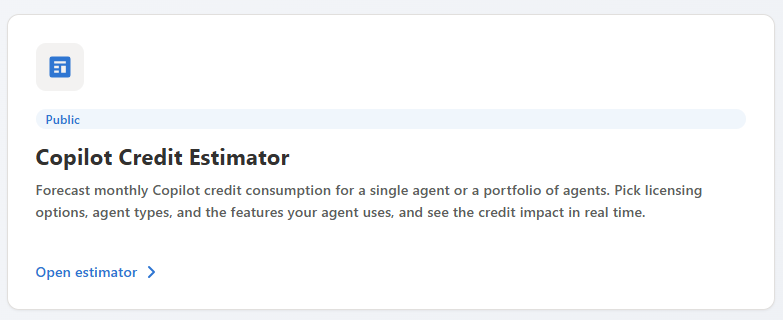
Copilot Studio Calculator: Copilot Credit Estimator
Copilot Cowork Calculator: Copilot Cowork Estimator
The Partner Opportunity
There is also a very positive side to this change. Because Copilot Credits are procured through Azure, partners have a strong opportunity to build or expand an Azure practice around AI consumption, governance, and cost management. This can increase revenue, improve margin, and create space for meaningful value-added services around AI adoption.
Starting next month, the relaunched SMB bundles, which combine Business SKUs with Copilot Business, will offer partners a 20% margin. This marks the first meaningful improvement in partner margin for AI services since launch and should help partners see clearer commercial value in these offers.
For partners of all sizes, the key question is no longer just whether customers should use AI. It is how partners can wrap the right services, governance, adoption planning, and commercial guidance around these technologies so customers can use them confidently and responsibly. Our MSP frontier Program is designed to help you address these challenges contact your account manager or any of the team in MicroWarehouse to find out more, or you can sign up for it here: MSP AI Frontier Programme

Support and Upcoming Learning Opportunities
I know this can feel difficult and unfamiliar at first. However, if you take the time to read the Microsoft blogs, review the licensing guidance, and experiment with the calculators, the model becomes much easier to understand. And if you need help, pick up the phone and I will talk you through it.
Keep an eye on our Learn page as well. We will be running a number of AI-focused events and webinars over the coming weeks and months. One of the formats we trialled last year was the AI community call, and we are planning to bring those back on a monthly basis.
These sessions will be a great opportunity to share your own AI experiences, hear what we are seeing in the market, and understand how Microsoft’s AI opportunity continues to evolve.
As always, you know where we are at MicroWarehouse (a SherWeb company).
Call us – 01 616 0400,
email us – sales@mwh.ie,
or drop us a Teams message, and we will be there to help.