 class="wp-singular news-template-default single single-news postid-8767 wp-custom-logo wp-theme-microwarehouse tribe-no-js">
On-Device AI: The Hardware Answer to Rising Cloud Costs
As a Microsoft Distributor Partner, we often get an early view of where Microsoft is investing. Right now, one of the most important conversations happening in the channel is around on-device AI. It sounds technical, but for resellers and customers alike, it quickly becomes a conversation about cost, security and productivity.
And that’s where the new Surface Pro and Surface Laptop stand out.
The Shift Most Businesses Haven’t Considered Yet
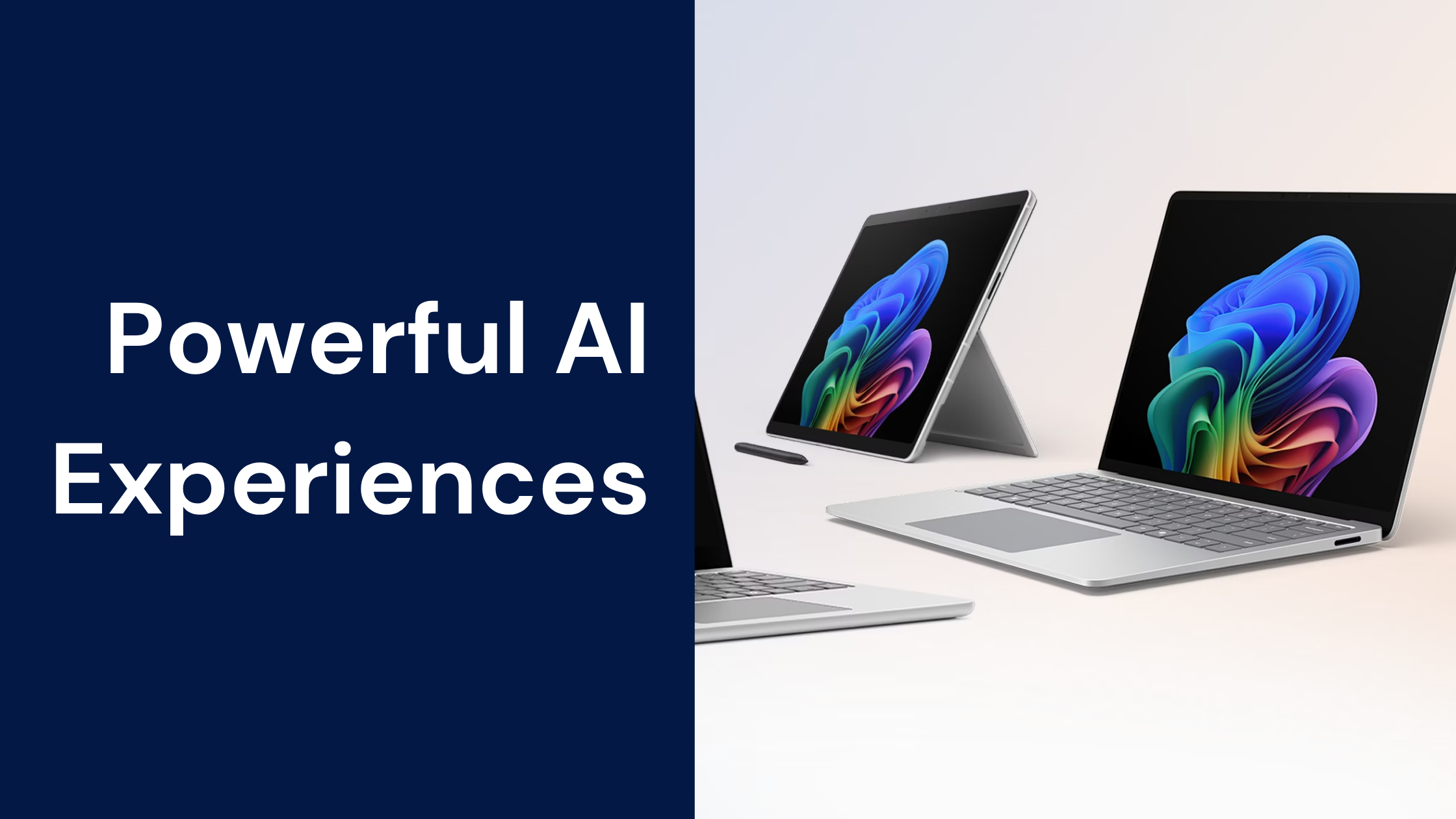
Microsoft’s new Surface Pro and Surface Laptop both carry a dedicated NPU (Neural Processing Unit) which runs AI workloads directly on the device. That means certain AI tasks can happen locally instead of being sent to the cloud.
At first glance, that might seem like a hardware specification. In reality, it has significant commercial implications. As organisations increase their use of AI services, cloud-based workloads can become an ongoing operational cost. Running suitable AI workloads locally reduces reliance on cloud processing and gives customers another way to manage how AI is delivered across their business.
The result is a more balanced approach where workloads can move between local processing and cloud services depending on the task.
From 1 July, Copilot Cowork usage starts consuming Copilot Credits. That is a real cost that lands on your customers’ bills as their AI usage scales. On-device AI through the NPU sidesteps that cost entirely. For customers already using Copilot or Cowork, the new Surface devices becomes part of a cost management conversation, not just a hardware refresh.
Why Customers Care About Cost and Data
When we speak with SMB customers about AI adoption, the same two concerns come up repeatedly: cost and data security.
Cost
Cloud AI services are incredibly powerful, but usage-based consumption means costs can increase as adoption grows. For businesses looking to scale AI across departments, on-device processing offers an attractive alternative for appropriate workloads. Once the hardware is in place, there is no additional AI consumption charge for tasks handled locally.
That creates a much easier conversation around long-term AI investment.
Data Security
For many organisations, the bigger concern is where their data goes. Legal firms, financial services organisations, healthcare providers and businesses operating under strict compliance requirements often hesitate to embrace AI because of concerns around sensitive information leaving their environment.
On-device AI helps address those concerns by processing suitable workloads locally, reducing the need to send data externally for every task. For some customers, that can be the difference between considering AI and dismissing it altogether.
What The Opportunity Is For Resellers
Many customers are still unaware that modern devices can run AI workloads locally. That creates an opportunity for partners to lead the conversation.
A simple starting point is to look at how customers are using AI today:
- Which workloads are currently being processed in the cloud?
- Which involve sensitive information?
- Which are used by remote workers or field-based teams?
- Which would benefit from reduced dependency on internet connectivity?
These discussions often reveal clear opportunities where on-device AI can add value.
Three Customers Worth Speaking To
As you review your customer base, consider:
- Businesses already investing heavily in cloud AI services and looking to control costs.
- Organisations that have delayed AI adoption because of security or compliance concerns.
- Mobile and remote workforces that need access to AI capabilities regardless of connectivity.
For each of these customers, the latest Surface range provides a practical solution rather than a theoretical discussion.
Turning AI Into A Device Conversation
The introduction of dedicated AI hardware changes the conversation around endpoint devices. Customers are no longer buying a laptop purely for performance, battery life or portability. They are investing in a platform that can deliver AI experiences directly on the device.
That creates a compelling reason to revisit device refresh conversations and position AI as part of a broader productivity strategy.
We stock the latest Surface Pro and Surface Laptop devices and are happy to help you identify the best opportunities within your customer base.
To learn more, get in touch with our sales team or browse what we have at store.mwh.ie.